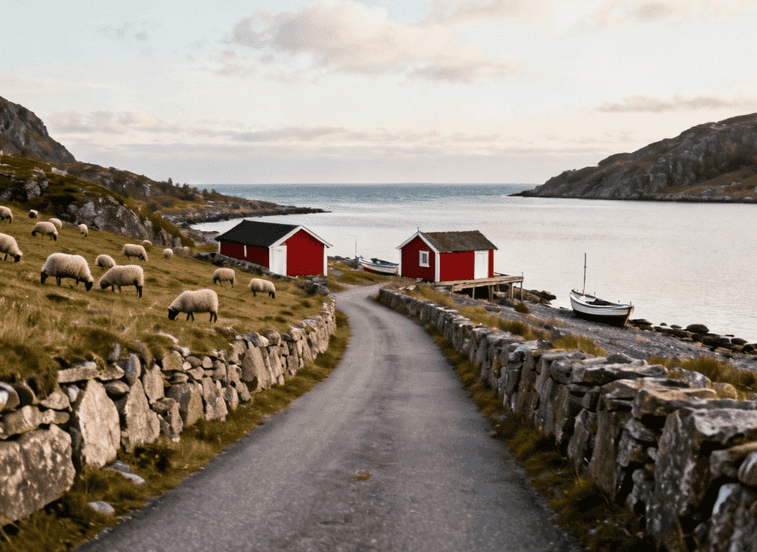
Losna Island – Life at the Mouth of the Fjord
Om dette eventyret
Losna is a small island near the mouth of Sognefjord where time seems to slow down and modern life feels distant despite being easily accessible by car via bridge connection. With no shops, no services, and only a handful of working farms maintaining centuries-old traditions, the island offers quiet single-lane roads winding through coastal landscapes, coastal paths along rocky shorelines, and wide views toward the open sea where the fjord meets the Norwegian Sea.
The Trail
Losna is a small island near the mouth of Sognefjord where time seems to slow down and modern life feels distant despite being easily accessible by car via bridge connection. With no shops, no services, and only a handful of working farms maintaining centuries-old traditions, the island offers quiet single-lane roads winding through coastal landscapes, coastal paths along rocky shorelines, and wide views toward the open sea where the fjord meets the Norwegian Sea. The island's exposed position means weather is often dramatic—wind is constant, storms roll in with little warning, and the light changes rapidly as clouds race across the sky. This harsh environment has shaped a unique culture of resilience.
What to Expect
Old stone walls built generations ago to shelter fields and livestock from salt spray still stand, though many now border abandoned plots reverting to natural vegetation. Traditional boathouses line protected coves, some still in use by fishermen, others slowly collapsing into romantic decay. Grazing sheep maintain the open landscape, their wool adapted to the wet, windy conditions. Walking the island gives insight into a way of life shaped entirely by wind, water, and seasons—where farmers time activities by tides and weather, not clocks; where isolation was the norm for centuries; and where every building, wall, and path represents adaptation to an unforgiving but beautiful environment.
Planning Your Visit
The population has declined from hundreds to a few dozen permanent residents, giving the island a melancholic atmosphere of fading culture. Yet the natural beauty is spectacular—seabirds nest on the cliffs, wildflowers color the meadows in summer, and the coastal geology features interesting rock formations and small beaches. The island is perfect for slow exploration by car, bike, or on foot, with the entire main road covering only about 10km. No tourist infrastructure exists, so bring all supplies. Visit during summer for mildest weather and longest days, or in autumn for dramatic storms and solitude. The island offers authentic experience of Norwegian coastal life without commercialization, ideal for those seeking quiet contemplation and cultural immersion in working landscape.
Never get stuck for words in Norwegian
Someone speaks to you in Norwegian? TalkBuoy listens in real time and suggests exactly what to say back. Your AI companion for travel conversations and language learning.
Informasjon om tilknytning Denne siden inneholder tilknyttede lenker. Vi kan tjene en provisjon fra kjøp gjort gjennom disse lenkene.
Oppdag Vestland med lokale guider
Slipp planleggingsstresset! Bla gjennom tusenvis av verifiserte turer, aktiviteter og opplevelser. Fra nordlysekspedisjoner til fjordcruise - finn det perfekte eventyret.
Skjulte Norge deltar i tilknyttede markedsføringsprogrammer, inkludert GetYourGuide og andre. Dette betyr at vi kan tjene en provisjon når du bestiller turer eller kjøper gjennom våre tilknyttede lenker. Dette kommer uten ekstra kostnad for deg og hjelper oss med å fortsette å tilby gratis kvalitetsinnhold om Norges skjulte skatter. Vi anbefaler kun tjenester og opplevelser vi tror vil forbedre ditt norske eventyr.
Plassering
GPS-koordinater
61.0673, 4.8659