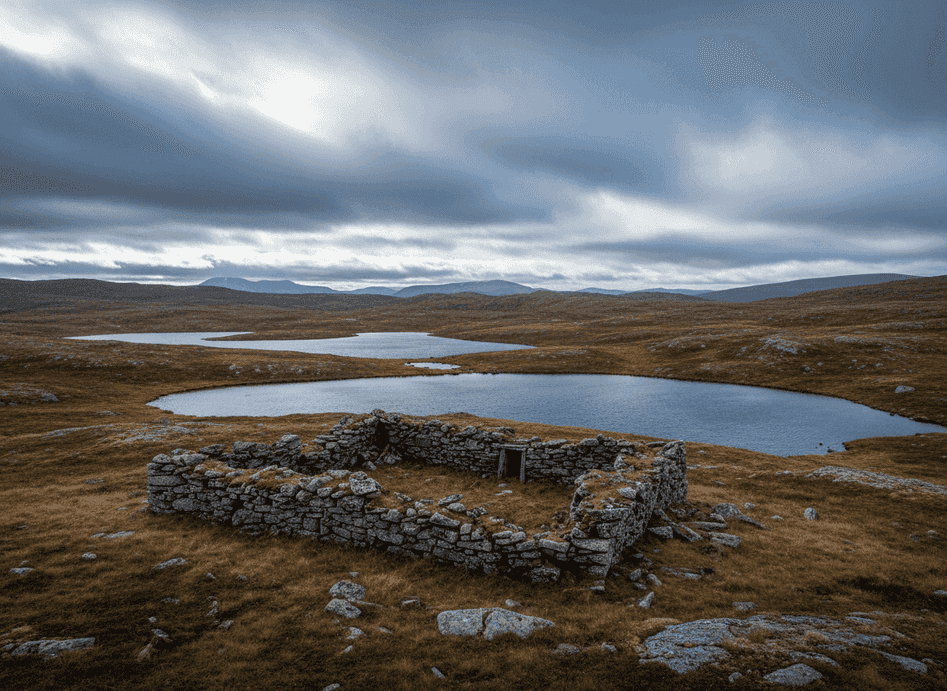
Froskevasshytta Ruins – Forgotten Shelter on the Plateau
About This Adventure
High on a windswept mountain plateau at approximately 1,100 meters elevation lie the remains of Froskevasshytta, an old stone shelter once used by hunters pursuing reindeer and ptarmigan, and by travelers crossing between valleys before modern roads existed. The shelter's strategic location on a natural route through the mountains made it a crucial waypoint for generations.
The Trail
High on a windswept mountain plateau at approximately 1,100 meters elevation lie the remains of Froskevasshytta, an old stone shelter once used by hunters pursuing reindeer and ptarmigan, and by travelers crossing between valleys before modern roads existed. The shelter's strategic location on a natural route through the mountains made it a crucial waypoint for generations. The stone ruins—walls still partially standing, foundations clearly visible—speak to the harsh conditions that made such shelters necessary for survival. Inside, you can see the fireplace where travelers warmed themselves and melted snow for water, and imagine huddling here during mountain storms. The surrounding landscape is open, quiet, and marked by small lakes reflecting the sky, rolling terrain of lichen-covered rocks and low alpine vegetation, and distant peaks creating a sense of vast space.
What to Expect
The plateau environment is quintessentially Norwegian highland—sparse, windswept, beautiful in its austerity. Few people pass through today, as the hut is reached only by hikers willing to trek several hours from the nearest road access, and the silence gives the place a timeless quality where human history feels both distant and immediate. The ruins are perfect for those interested in history woven gently into nature—there's no interpretation center or gift shop, just weathered stones and the wind's stories. The hike to reach Froskevasshytta crosses typical mountain plateau terrain with potentially boggy sections, stream crossings, and navigation challenges in fog. Bring map and compass as marking may be sporadic.
Planning Your Visit
The area is best visited July through September when snow has cleared. Weather can change rapidly on exposed plateaus—pack warm layers and rain protection. The remoteness means self-sufficiency is essential. Consider this a destination for hikers seeking genuine wilderness history, not a casual heritage site visit. The reward is solitude, mountain scenery, and tangible connection to Norway's highland heritage.
Never get stuck for words in Norwegian
Someone speaks to you in Norwegian? TalkBuoy listens in real time and suggests exactly what to say back. Your AI companion for travel conversations and language learning.
Affiliate Disclosure This page contains affiliate links. We may earn a commission from purchases made through these links.
Discover Innlandet with Local Guides
Skip the planning stress! Browse thousands of verified tours, activities, and experiences. From Northern Lights expeditions to fjord cruises - find the perfect adventure.
Hidden Norway participates in affiliate marketing programs, including GetYourGuide and others. This means we may earn a commission when you book tours or make purchases through our affiliate links. This comes at no extra cost to you and helps us keep providing free, quality content about Norway's hidden gems. We only recommend services and experiences we genuinely believe will enhance your Norwegian adventure.
Location
GPS Coordinates
61.7354, 9.4219